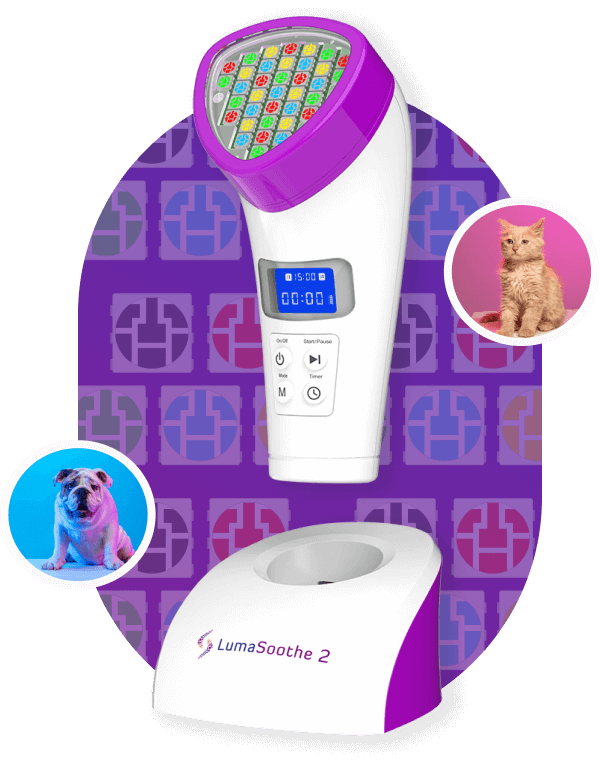

When shopping for a pet light therapy device, it’s easy to assume they’re all essentially the same. Most advertise red light therapy, promise similar benefits, and often look nearly identical. But once you look beyond the marketing, an important difference becomes clear: not all light therapy devices use the same wavelengths, and not all are designed to treat the same types of tissues.
This is where multi-wavelength light therapy for pets stands apart. Instead of relying on a single color of light, advanced devices combine multiple therapeutic wavelengths and dedicated treatment modes to support different wellness goals. Whether you’re looking to promote joint mobility in an aging dog, support muscle recovery after activity, or maintain healthy skin and coat condition, understanding how these wavelengths work together can help you make a more informed decision.
In this guide, we’ll explain why wavelength selection matters, how deep and surface treatment modes differ, what to look for when comparing pet light therapy devices, and why a multi-wavelength approach offers greater versatility for at-home care.
Quick Takeaways
Before diving into the science, here are the most important things every pet owner should know.
✓ Not all pet light therapy devices use the same wavelengths.
✓ Different wavelengths are commonly selected for different wellness applications.
✓ Multi-wavelength devices provide greater treatment flexibility than single-wavelength devices.
✓ Dedicated treatment modes allow pet owners to better match the treatment to the area being supported.
✓ Choosing a device involves much more than comparing price or appearance.
✓ Light therapy is intended to support your pet’s natural wellness and should complement—not replace—professional veterinary care.
Table of Contents
- Every Light Therapy Device Looks Similar…But They Aren’t
- Understanding Photobiomodulation: The Science Behind Light Therapy
- Why Different Wavelengths Matter
- Why Advanced Devices Use More Than One Wavelength
- Why Treatment Modes Matter Just as Much as Wavelengths
- Single-Wavelength vs. Multi-Wavelength Devices
- How to Choose the Right Pet Light Therapy Device
- Common Mistakes Pet Owners Make
- How LumaSoothe 2 Puts These Principles into Practice
Every Light Therapy Device Looks Similar…But They Aren’t
If you’ve searched online for a pet light therapy device, you’ve probably noticed a pattern. Many products use similar language, feature similar designs, and highlight red light therapy as the primary feature. At first glance, it can be difficult to understand why prices, specifications, and capabilities differ so much.
The answer lies in what’s happening beneath the surface.
A light therapy device isn’t defined by its appearance—it’s defined by the wavelengths it emits, how those wavelengths are combined, and whether the device is designed to support different types of tissues. These factors influence how versatile a device can be for everyday pet wellness.
Imagine having only one tool in your toolbox. It might work well for one job, but it won’t be the best choice for every situation. A multi-wavelength light therapy device takes a different approach by incorporating several therapeutic wavelengths, allowing one device to support a broader range of wellness applications.
This doesn’t mean that more wavelengths automatically make a device “better.” Instead, it means the device may be more versatile, giving pet owners the ability to choose a treatment approach that better matches the area they’re supporting.
For example, a pet experiencing stiffness in a hip joint has different needs than one with a superficial skin irritation. The tissues involved are different, and many modern light therapy systems reflect this by offering dedicated treatment modes that combine specific wavelengths for different applications.
Understanding these differences is one of the most important steps you can take before investing in a pet light therapy device.
Understanding Photobiomodulation: The Science Behind Light Therapy
The scientific term for light therapy is Photobiomodulation (PBM). While the name sounds complex, the basic idea is surprisingly straightforward.
Photobiomodulation uses specific wavelengths of non-ionizing light to interact with cells. Researchers believe these wavelengths are absorbed by structures inside cells called mitochondria, which are responsible for producing much of the body’s cellular energy in the form of ATP.
By influencing normal cellular processes, Photobiomodulation is being studied for its potential to support healthy tissue function, circulation, and the body’s natural recovery mechanisms.
Research NoteVeterinary research has examined both laser- and LED-based photobiomodulation in dogs, cats, and horses, although study results and treatment protocols vary, as summarized in this 2023 systematic review of veterinary light therapy.
One of the most important things to understand is that not every wavelength behaves the same way.
Some penetrate more deeply into tissue, while others interact primarily with tissues closer to the skin’s surface.
This is why veterinary rehabilitation professionals often select different wavelengths—or combinations of wavelengths—depending on the treatment goal.
As research has expanded, many at-home pet light therapy devices have evolved beyond single-wavelength designs to incorporate multiple therapeutic wavelengths, giving pet owners greater flexibility while still emphasizing proper use and veterinary guidance.
Understanding how these wavelengths differ is the next step toward choosing a device that fits your pet’s individual needs.
Why Different Wavelengths Matter
One of the biggest misconceptions about pet light therapy is that every light therapy device works exactly the same way.
In reality, each wavelength has unique characteristics, including how deeply it penetrates tissue and the types of wellness applications for which it is commonly selected.
Rather than relying on a single wavelength for every situation, many advanced pet light therapy systems combine several wavelengths to create a more versatile approach.
Let’s look at the five wavelengths most commonly found in advanced multi-wavelength systems.
940 nm Infrared Light: Reaching Deeper Tissues
Infrared light cannot be seen by the human eye, yet it plays one of the most important roles in many therapeutic light systems.
Because infrared wavelengths penetrate deeper than visible light, they are commonly selected for applications involving:
- Joints
- Muscles
- Tendons
- Ligaments
- Connective tissue
For example, an aging dog experiencing stiffness after a walk or an active sporting dog recovering after exercise may benefit from a treatment mode designed for deeper tissues.
Infrared light has become an important component of many veterinary rehabilitation protocols because of its ability to reach structures beneath the skin.
650 nm Red Light: The Foundation of Photobiomodulation
When most people hear the phrase “red light therapy,” they’re referring to wavelengths similar to 650 nanometers.
Red light is one of the most extensively researched wavelengths in photobiomodulation and appears in many professional and at-home devices.
It is commonly included in protocols intended to support:
- Normal cellular energy production
- Healthy circulation
- Tissue wellness
- Recovery following activity
- General mobility support
Because of its versatility, red light is often included in both deep tissue and surface-focused treatment modes.
520 nm Green Light: An Emerging Component of Multi-Wavelength Systems
Green light is a newer addition to many advanced light therapy devices.
Although research into green wavelengths is still developing, they are increasingly incorporated into multi-wavelength systems as part of a broader therapeutic approach.
Rather than relying on a single wavelength, combining green light with red and infrared wavelengths allows manufacturers to create more versatile treatment modes that address a wider range of wellness goals.
As with any evolving area of research, it’s important to recognize that scientists continue to study how different wavelengths may complement one another.
470 nm Blue Light: Supporting Surface Wellness
Blue light is commonly included in multi-wavelength light therapy systems because it interacts primarily with tissues near the skin’s surface.
In veterinary and broader photobiomodulation research, blue wavelengths have been explored for applications involving skin health, surface tissue wellness, and microbial environments. Because of these characteristics, blue light is often incorporated into treatment modes intended for superficial areas where deeper-penetrating infrared wavelengths are not required.
590 nm Yellow Light: Completing a Surface Treatment Approach
Yellow (amber) light is another wavelength commonly found in advanced multi-wavelength therapy systems. While it has been studied less extensively than red and infrared light, it is often included because of its potential role in supporting surface tissue wellness and sensory comfort.
Rather than relying on a single visible wavelength, manufacturers may combine yellow light with red, green, and blue wavelengths to provide a broader spectrum of light for surface-focused treatment protocols.
Why Advanced Devices Use More Than One Wavelength
Imagine trying to maintain every part of your home using only a screwdriver. It might work for certain tasks, but it wouldn’t be the right tool for every job.
Light therapy follows the same principle.
Different tissues have different characteristics, and each wavelength of light interacts with tissue differently. Some penetrate more deeply, while others are absorbed closer to the surface. Because of this, many modern pet light therapy devices combine several wavelengths instead of relying on just one.
Rather than asking,
“Which wavelength is best?”
a better question is:
“Which combination of wavelengths is most appropriate for the area I’m supporting?”
This multi-wavelength approach provides greater flexibility and allows manufacturers to design treatment settings for different wellness goals instead of using the same light combination for every situation.
Quick Reference Guide
| Wavelength | Light Color | Typical Penetration | Common Wellness Focus |
|---|---|---|---|
| 940 nm | Infrared | Deep | Joints, muscles, tendons, ligaments |
| 650 nm | Red | Moderate | Cellular energy, circulation, tissue wellness |
| 520 nm | Green | Surface to moderate | Included in multi-wavelength treatment protocols |
| 470 nm | Blue | Surface | Skin and superficial tissue applications |
| 590 nm | Yellow | Surface | Surface tissue wellness and multi-wavelength skin protocols |
No single wavelength is intended to do everything. Instead, advanced devices combine complementary wavelengths to create more versatile treatment options for different parts of the body.
Why Treatment Modes Matter Just as Much as Wavelengths
Once you understand why multiple wavelengths are valuable, the next logical question is:
Why do some pet light therapy devices include more than one treatment mode?
The answer is surprisingly simple.
Different wellness goals often benefit from different combinations of light. Supporting an aging dog’s hip joint isn’t the same as supporting healthy skin after a minor irritation. The tissues involved are different, so using the exact same combination of wavelengths for every application isn’t always the most practical approach.
That’s why many advanced pet light therapy devices organize their wavelengths into dedicated treatment modes rather than activating every wavelength at the same time.
Instead of asking pet owners to decide which individual LEDs to use, the device groups complementary wavelengths together for specific wellness applications.
This creates a more intuitive experience while giving pet owners greater flexibility when treating different areas of the body.
Deep Treatment (DT) Mode
Deep Treatment (DT) Mode is designed for wellness applications involving tissues beneath the skin.
By combining multiple wavelengths selected for deeper tissue applications, this mode is commonly used when supporting:
- Joint mobility
- Muscles
- Tendons
- Ligaments
- Connective tissue
- Recovery following physical activity
- Overall musculoskeletal wellness
DT Mode Wavelength Combination
| Wavelength | Light Color | Purpose Within the Mode |
|---|---|---|
| 940 nm | Infrared | Reaches deeper tissues |
| 650 nm | Red | Supports normal cellular energy production and circulation |
| 520 nm | Green | Complements the multi-wavelength treatment protocol |
Because infrared light penetrates more deeply than visible light, it serves as the foundation of the Deep Treatment Mode, while the addition of red and green wavelengths creates a broader therapeutic light profile.
For pet owners, this means they don’t have to guess which wavelengths are appropriate for deeper tissues. The combination has already been organized into a single treatment mode that’s easy to select and use.
Surface Treatment (ST) Mode
Not every wellness goal involves deeper tissues.
Sometimes the focus is maintaining healthy skin, supporting coat condition, or caring for tissues located much closer to the surface.
For these situations, many advanced systems use a dedicated Surface Treatment (ST) Mode.
Rather than emphasizing deeper penetration, Surface Treatment Mode combines visible-light wavelengths that are commonly selected for superficial tissue applications.
ST Mode Wavelength Combination
| Wavelength | Light Color | Purpose Within the Mode |
| 650 nm | Red | Supports normal tissue wellness and circulation |
| 520 nm | Green | Complements the multi-wavelength protocol |
| 470 nm | Blue | Commonly included in skin-focused applications |
| 590 nm | Yellow | Complements surface wellness protocols |
By combining four visible wavelengths into one dedicated mode, pet owners can choose a treatment setting designed specifically for surface tissues instead of using the same configuration for every situation.
Deep Treatment vs. Surface Treatment: What’s the Difference?
One of the biggest advantages of a dual-mode system is simplicity.
Instead of asking pet owners to understand individual wavelengths, the device organizes them into treatment modes that match the area they’re supporting.
At-a-Glance Comparison
| Feature | Deep Treatment (DT) Mode | Surface Treatment (ST) Mode |
| Primary Focus | Deeper tissues | Surface tissues |
| Typical Applications | Joints, muscles, tendons, ligaments | Skin, coat, superficial tissues |
| Includes Infrared | ✔ Yes (940 nm) | ✘ No |
| Includes Red Light | ✔ Yes | ✔ Yes |
| Includes Green Light | ✔ Yes | ✔ Yes |
| Includes Blue Light | ✘ No | ✔ Yes |
| Includes Yellow Light | ✘ No | ✔ Yes |
Rather than thinking of one mode as “better” than the other, it’s more helpful to think of them as different tools for different situations.
Just as a veterinarian may recommend different treatment approaches depending on the condition being addressed, advanced light therapy devices are designed to give pet owners treatment options that better match different wellness goals
Why This Matters When Choosing a Device
When comparing pet light therapy devices, it’s easy to focus on appearance or price.
However, one of the most important questions you can ask is:
Does this device provide flexibility for different types of treatments?
A single-wavelength device may be suitable for certain applications, but a multi-wavelength system with dedicated treatment modes gives pet owners the ability to support a wider range of wellness goals without needing multiple devices.
As you continue evaluating different pet light therapy devices, look beyond the number of LEDs or the color of the housing. Instead, consider how the wavelengths are organized, whether the device offers separate treatment modes, and whether its design reflects an understanding that different tissues may benefit from different therapeutic approaches.
In the next section, we’ll compare single-wavelength and multi-wavelength pet light therapy devices side by side, making it easier to understand what separates basic devices from more advanced systems.
Single-Wavelength vs. Multi-Wavelength Devices
If you’ve spent any time comparing pet light therapy devices, you’ve probably noticed a wide range of features and prices. Some devices promote a single wavelength of red light, while others incorporate multiple wavelengths and dedicated treatment modes.
So, which approach is right for your pet?
The answer depends less on which device has the most LEDs and more on how the light is being used.
A single-wavelength device can be a good introduction to light therapy and may be appropriate for pet owners with one very specific wellness goal. However, many pet owners eventually discover that different situations call for different treatment approaches.
For example, supporting an older dog’s hips is not the same as maintaining healthy skin after a minor irritation. The tissues involved are different, which is why many advanced systems use multiple wavelengths organized into dedicated treatment modes.
Rather than trying to make one wavelength perform every task, a multi-wavelength system is designed to provide greater flexibility across a wider range of everyday wellness applications.
Side-by-Side Comparison
| Feature | Single-Wavelength Device | Multi-Wavelength Device |
|---|---|---|
| Number of therapeutic wavelengths | One | Multiple |
| Treatment flexibility | Limited | Greater versatility for different wellness goals |
| Dedicated treatment modes | Usually not available | Often included |
| Deep tissue support | Depends on wavelength | May combine wavelengths for deeper applications |
| Surface wellness support | Depends on wavelength | May include dedicated surface-focused mode |
| Adaptability | One primary treatment approach | Multiple treatment options within one device |
It’s important to remember that more wavelengths do not automatically make a device more effective. What matters is how those wavelengths are selected, combined, and applied for the intended purpose.
This is why understanding the design philosophy behind a device is just as important as reading the feature list.
How to Choose the Right Pet Light Therapy Device
With more pet light therapy products entering the market every year, choosing the right one can feel overwhelming. Marketing claims, technical terminology, and similar-looking devices can make it difficult to know which features truly matter.
Instead of focusing only on price or appearance, use the following checklist when comparing devices.
1. Look for Multiple Therapeutic Wavelengths
Different wavelengths are commonly selected for different wellness applications. A device that incorporates multiple wavelengths may offer greater flexibility than one that relies on a single wavelength alone.
Ask yourself:
- Does the manufacturer explain why each wavelength is included?
- Are the wavelengths appropriate for both deeper and surface applications?
- Is the device designed around a treatment strategy rather than simply adding more LEDs?
2. Choose a Device with Dedicated Treatment Modes
One of the easiest ways to evaluate a device is to see whether it offers different treatment modes for different wellness goals.
Separate modes can simplify treatment by grouping complementary wavelengths together instead of expecting pet owners to understand individual LED combinations.
This allows you to select a mode based on the type of tissue you’re supporting rather than guessing which wavelength to use.
3. Make Sure the Device Is Designed for Pets
Devices designed specifically for companion animals often take into account factors such as treatment area, ease of handling, and practical use around dogs and cats.
Look for products that provide clear instructions and are intended for at-home use by pet owners.
4. Ease of Use Matters More Than You Think
Even the most advanced technology won’t help if it sits in a drawer.
Choose a device that’s comfortable to hold, simple to operate, and easy to incorporate into your regular pet care routine.
Consistency is often one of the most important factors in any wellness program.
5. Educational Support Is a Good Sign
A reputable manufacturer should help you understand why the device was designed the way it was—not simply list technical specifications.
Look for companies that explain:
- The role of different wavelengths.
- Why treatment modes exist.
- Recommended treatment guidelines.
- Safety information.
- Frequently asked questions.
The more transparent a company is about its technology, the easier it becomes to make an informed decision.
Quick Buyer’s Checklist
Before purchasing a pet light therapy device, ask yourself:
✔ Does it use multiple therapeutic wavelengths?
✔ Does it offer separate treatment modes for different wellness goals?
✔ Is it designed specifically for pets?
✔ Is it easy to use consistently at home?
✔ Does the manufacturer clearly explain the technology?
✔ Does the company provide ongoing customer support and educational resources?
If you can answer “yes” to most of these questions, you’re likely evaluating a device that has been designed with both versatility and usability in mind.
Common Mistakes Pet Owners Make
Light therapy is easy to use, but choosing the wrong device—or using it without understanding its capabilities—can lead to disappointment.
Here are some of the most common mistakes pet owners make when shopping for or using a light therapy device.
Choosing Based on Price Alone
While budget is always an important consideration, the least expensive option isn’t always the best long-term value.
Take time to compare wavelengths, treatment modes, ease of use, and manufacturer support rather than focusing only on cost.
Assuming Every Red Light Device Is the Same
Two devices may both advertise “red light therapy,” yet use completely different wavelength combinations and treatment approaches.
Understanding what’s inside the device is often more important than what the packaging says.
Using the Same Treatment Setting for Every Situation
Supporting deeper tissues and maintaining healthy skin involve different areas of the body.
A device with dedicated treatment modes allows you to better match the treatment to the application instead of relying on a one-size-fits-all approach.
Expecting Immediate Results
Light therapy is generally used as part of an ongoing wellness routine rather than as a one-time treatment.
Following the manufacturer’s recommended schedule and consulting your veterinarian when appropriate can help set realistic expectations.
Forgetting That Light Therapy Is Part of a Bigger Wellness Plan
Light therapy is best viewed as one component of your pet’s overall care.
Good nutrition, appropriate exercise, routine veterinary checkups, weight management, and preventive care all work together to support your pet’s long-term health and quality of life.
In the next section, we’ll look at how LumaSoothe 2 brings these principles together by combining five therapeutic wavelengths into two dedicated treatment modes designed to give pet owners greater flexibility in a single handheld device.
How LumaSoothe 2 Puts These Principles into Practice
Throughout this guide, we’ve explored why wavelength selection matters, how different wavelengths interact with tissues, and why advanced pet light therapy devices often organize those wavelengths into dedicated treatment modes.
These concepts aren’t simply theoretical—they’re the foundation behind how modern multi-wavelength devices are designed.
LumaSoothe 2 is one example of this design philosophy in action. (See 👉 LumaSoothe 2 treatment modes)
Instead of relying on a single wavelength or one treatment setting for every situation, LumaSoothe 2 combines five therapeutic wavelengths into two dedicated treatment modes, allowing pet owners to choose the setting that best matches their pet’s wellness goals.
The objective isn’t to make treatments more complicated—it’s to make them more intuitive.
Rather than asking pet owners to decide which individual LEDs to activate, LumaSoothe 2 groups complementary wavelengths into easy-to-use treatment modes.
Deep Treatment (DT) Mode
The Deep Treatment (DT) Mode is designed for applications involving tissues beneath the skin.
It combines three therapeutic wavelengths:
- 940 nm Infrared
- 650 nm Red
- 520 nm Green
This combination is intended for areas such as:
- Joints
- Muscles
- Tendons
- Ligaments
- Connective tissue
Whether you’re supporting an aging dog that enjoys daily walks, helping an active sporting dog recover after exercise, or maintaining your pet’s mobility as part of an overall wellness routine, the Deep Treatment Mode provides a dedicated setting designed specifically for deeper tissue applications.
Surface Treatment (ST) Mode
The Surface Treatment (ST) Mode is intended for tissues closer to the skin.
It combines four visible-light wavelengths:
- 650 nm Red
- 520 nm Green
- 470 nm Blue
- 590 nm Yellow
This combination is designed for wellness applications involving:
- Skin
- Coat
- Superficial tissues
By combining multiple visible wavelengths into one treatment mode, LumaSoothe 2 offers a dedicated option for surface-focused care without requiring pet owners to switch between different devices.
Why Five Wavelengths Matter
One of the questions pet owners often ask is:
“Why not just use red light?”
Red light has earned its reputation because it is one of the most extensively studied wavelengths in photobiomodulation. However, modern light therapy has evolved beyond relying on a single wavelength alone.
Advanced systems frequently combine multiple wavelengths because each contributes different characteristics to the overall treatment strategy.
Rather than expecting one wavelength to address every wellness goal, LumaSoothe 2 combines:
- Infrared for deeper tissue applications.
- Red as a foundational wavelength used in both treatment modes.
- Green as part of both multi-wavelength protocols.
- Blue for surface-focused applications.
- Yellow to complement the Surface Treatment Mode.
This multi-wavelength design provides greater versatility than a single-wavelength approach while allowing treatments to be matched more closely to the area being supported.
One Device, Two Treatment Modes
Many pet owners appreciate simplicity.
Instead of purchasing separate devices for different wellness applications, LumaSoothe 2 combines two dedicated treatment modes into one handheld system.
At a Glance
| If You’re Supporting… | Recommended Mode |
|---|---|
| Joints | Deep Treatment (DT) |
| Muscles | Deep Treatment (DT) |
| Tendons & Ligaments | Deep Treatment (DT) |
| Recovery After Activity | Deep Treatment (DT) |
| Skin | Surface Treatment (ST) |
| Coat | Surface Treatment (ST) |
| Superficial Tissue Wellness | Surface Treatment (ST) |
This straightforward approach helps eliminate guesswork, making it easier for pet owners to choose the treatment mode that best matches the area they’re supporting.
Designed for Everyday Home Use
Consistency is one of the most important aspects of any wellness routine.
Because LumaSoothe 2 is designed for at-home use, pet owners can incorporate light therapy into their regular care routine without relying solely on scheduled clinic visits.
Many owners appreciate being able to use the device as part of their pet’s ongoing wellness program, whether they’re supporting an active lifestyle, caring for a senior companion, or maintaining healthy skin and coat condition.
As with any wellness tool, it’s important to follow the manufacturer’s instructions and consult your veterinarian if your pet has a diagnosed medical condition, a serious injury, or is recovering from surgery.
Choosing the Right Device Starts with the Right Questions
By now, one thing should be clear:
Choosing a pet light therapy device isn’t just about comparing prices or counting LEDs.
Instead, ask questions such as:
- Does the device use multiple therapeutic wavelengths?
- Are those wavelengths organized into dedicated treatment modes?
- Does the design support different wellness goals?
- Is the device intended specifically for companion animals?
- Does the manufacturer explain the purpose behind its technology?
When you understand the answers to these questions, you’re in a much better position to choose a device that fits both your pet’s needs and your long-term wellness goals.
In the next section, we’ll answer some of the most common questions pet owners have about multi-wavelength light therapy for pets, including safety, treatment frequency, and how to get the most from your device.
Bring Multi-Wavelength Light Therapy Home
LumaSoothe 2 brings the technology covered in this guide together in one easy-to-use handheld device designed specifically for pets.
With five therapeutic wavelengths organized into two dedicated treatment modes, you can support deeper areas such as joints and muscles or focus on surface-level needs involving the skin and coat.
- Five therapeutic wavelengths
- Deep and Surface Treatment Modes
- Convenient at-home use